Sugar is a type of carbohydrate that provides energy for our bodies. Understanding its role in nutrition helps us make informed dietary choices.
Carbohydrates are an important part of our diets. About half of the energy we get from the food we eat comes from carbohydrates. There are different types of carbohydrates, with different names and structures; one example is glucose. Our brain depends on glucose for most of its energy needs and our body prefers it to fuel our muscles. Our blood sugar is a measure of the amount of glucose travelling around in our bloodstream.
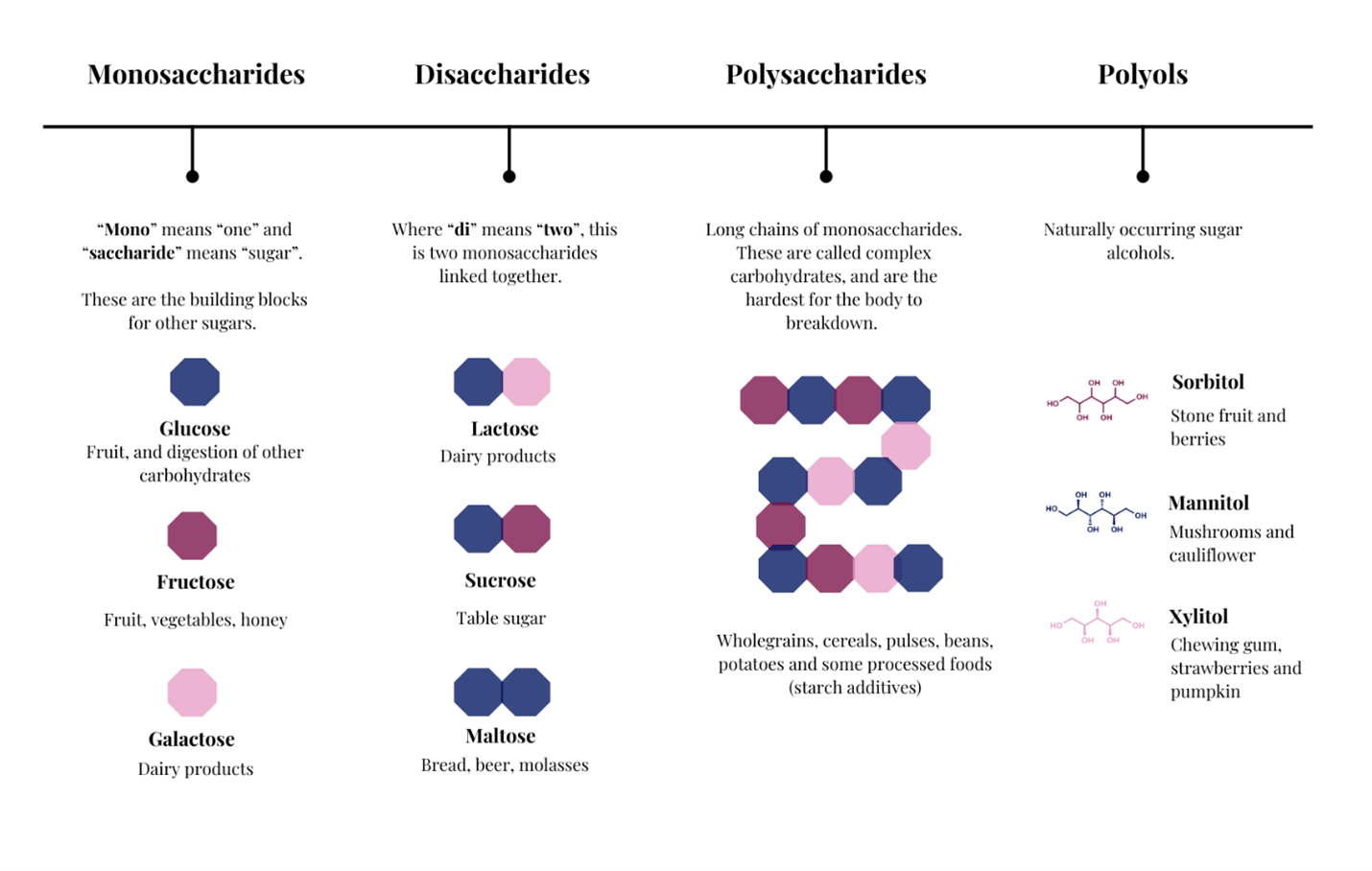
In the same way that proteins are made up of amino acids, carbohydrates are made up of sugars (also known as saccharides).
Table 1: Carbohydrates in food
| Definition | Examples | Found in which foods | |
| Monosaccharides |
Single sugar units, these are the building blocks for all other sugars/carbohydrate. |
Glucose, fructose, galactose. |
Glucose* (fruits), Fructose (fruits, vegetables and honey), Galactose, often found bound to glucose i.e. in dairy products. |
| Disaccharides |
Two linked single sugar units (monosaccharides). |
Lactose, maltose and sucrose. |
Lactose – milk and milk products. Maltose – grains Sucrose – table sugar/sugar cane |
| Polysaccharides |
Long chains of sugars joined together. These are the most complex form of carbohydrates and are the hardest for the body to breakdown. |
Starch, cellulose, pectin, gums and fibre. |
Bread, wholegrains, pulses, beans, pasta, potatoes. |
|
Polyols |
Naturally occurring sugar alcohols. |
Sorbitol, xylitol, erythritol, isomalt. |
Some fruits, vegetables and processed foods. |
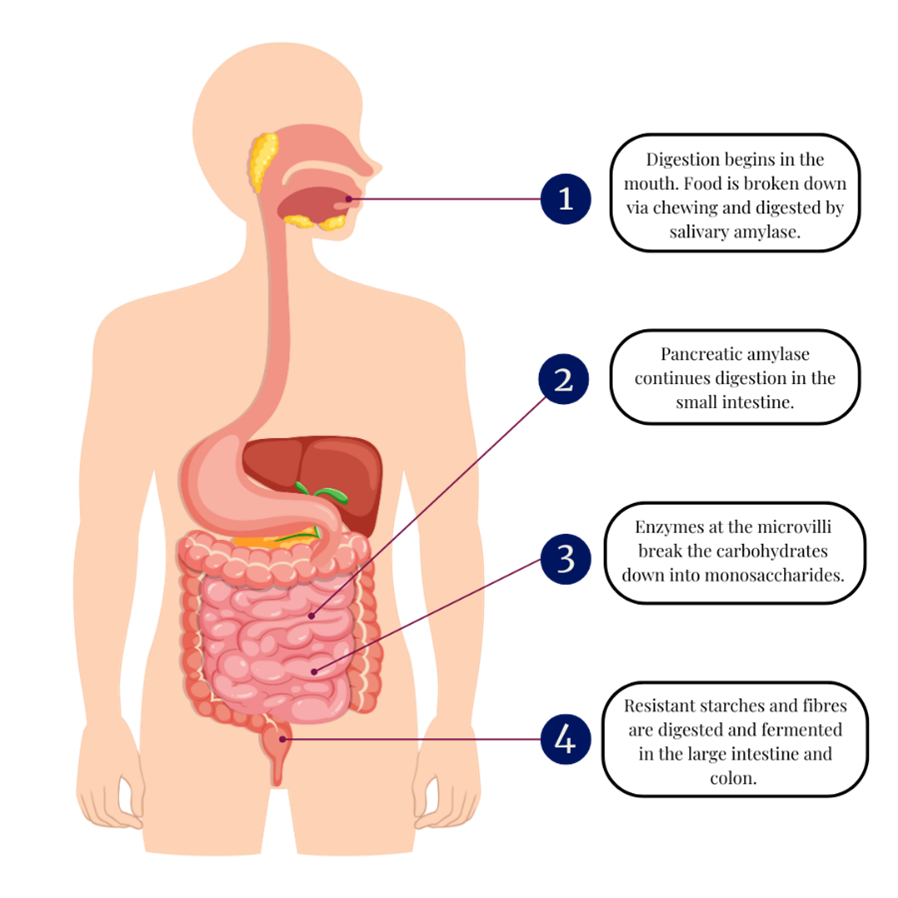
How are carbohydrates digested and used for energy in our body?
Carbohydrates are a fantastic source of energy. They are broken down into smaller molecules that our body can use for energy.
Carbohydrates are digested in stages when we eat:
- When we chew, food is broken into small pieces. An enzyme in our saliva begins to chemically break down the food.
- When the food moves towards our stomach, another enzyme breaks the carbohydrates into monosaccharides.
- Once the monosaccharides reach the small intestine, they are small enough to cross into the blood stream.
- Complex carbohydrates are digested in a similar way. However, the body cannot digest the fibre found in complex carbohydrates. Instead, some of this is fermented by gut bacteria, which helps keep our digestive system functioning well. The rest passes through the digestive system and is excreted in the stool.
Our body works to keep a constant supply of glucose circulating in the bloodstream to fuel the brain, muscles and other body functions. Excess glucose is stored as glycogen in the liver or muscles. Once these reserves are full, it is converted to fat for longer-term storage. If we consume more energy than we need, the excess energy will be stored as body fat.